
Apparel & Supply Chain Glossary
Plain-English definitions of the manufacturing, decoration, compliance and shipping terms you will come across when sourcing custom clothing, uniforms and branded merchandise.
A
- Air Freight
Shipping goods by aircraft. Much faster than sea freight but considerably more expensive per kilo, so it is usually kept for samples, urgent replenishment or high-value, low-weight orders. See also Sea Freight.
- AQL (Acceptable Quality Limit)
A statistical sampling method, based on ISO 2859-1, used in pre-shipment inspections. An inspector checks a set number of units from a production lot and the lot passes or fails depending on how many defects are found against the agreed AQL level. Apparel orders often use different levels for critical, major and minor defects.
B
- Blanks
Plain, undecorated garments such as t-shirts, hoodies or polos, bought in stock and then branded with printing or embroidery. The alternative is cut and sew, where the garment itself is made to your specification.
- Bulk Production
The full production run of an order, started once the pre-production sample has been approved. Fabric, trims, sizing and decoration in bulk should match the approved sample.
C
- Care Label
A permanent label sewn into a garment with washing, drying and ironing instructions. In the United States, care labels on textile wearing apparel are required under the FTC Care Labeling Rule. Fiber content and country of origin are usually shown on the same or an adjacent label.
- Customs Clearance
The process of getting imported goods released by the customs authority of the destination country. It involves submitting the correct documents, declaring the HS code and value of the goods, and paying any duties and taxes due.
- Cut and Sew
Garment manufacturing where fabric is cut to a pattern and sewn into a finished product built to your own design, fabric choice and fit, rather than decorating ready-made blanks.
D
- DDP (Delivered Duty Paid)
An Incoterm under which the seller delivers the goods to the named destination, cleared for import, and pays all transport costs, duties and taxes. The buyer simply receives the goods.
- DWR (Durable Water Repellent)
A finish applied to the outer fabric of jackets and technical garments so that water beads and rolls off the surface instead of soaking in. It is not the same as a waterproof membrane and wears down over time with use and washing.
- Dye Sublimation
A decoration method where designs are printed onto transfer paper and then heat-pressed so the dye bonds into the fibers. It allows full-color, all-over designs that do not crack or peel, and works best on white or light-colored polyester fabrics. Common for sportswear and team kits.
E
- Embroidery
Stitching a logo or design directly into a garment using thread. Hard-wearing and premium in appearance, it is widely used on uniforms, workwear, polos, caps and outerwear. Logos are first converted into a stitch file, a process known as digitizing.
- EXW (Ex Works)
An Incoterm under which the seller makes the goods available at its own premises and the buyer is responsible for all transport, export and import formalities, costs and risks from that point.
F
- Fabric Weight (GSM)
The weight of a fabric measured in grams per square meter. A higher GSM generally means a heavier, more substantial fabric. A lightweight t-shirt might be around 140 to 160 GSM, while a heavyweight sweatshirt can be 300 GSM or more.
- FCL and LCL
Full Container Load (FCL) means a shipping container is used for one shipment only. Less than Container Load (LCL) means a shipment shares container space with goods from other shippers. LCL suits smaller volumes, while FCL is usually more economical once an order fills most of a container.
- FOB (Free On Board)
An Incoterm for sea and inland waterway transport. The seller clears the goods for export and loads them on board the vessel at the named port of shipment. Risk passes to the buyer once the goods are on board, and the buyer pays the main freight from there.
- Freight Forwarder
A company that organizes the movement of goods on behalf of a shipper, booking space with carriers, preparing shipping documents and often arranging customs clearance and onward delivery.
G
- GOTS (Global Organic Textile Standard)
A certification standard for textiles made from organic fibers. It covers the supply chain from fiber through processing and manufacturing, and includes environmental and social criteria as well as minimum organic content. See also Organic Cotton.
- Grading
Scaling a garment's base pattern up and down to create the full size range, using a set of measurement increments for each size. Accurate grading keeps the fit consistent from the smallest to the largest size. See also Size Set.
- GRS (Global Recycled Standard)
A certification standard owned by Textile Exchange that verifies the recycled content of a product and tracks it through the supply chain. It also sets social, environmental and chemical requirements for the facilities involved. See also Recycled Polyester.
H
- Hang Tag
A card tag attached to a garment, usually with a plastic fastener or string, carrying branding, price, size, barcode or product information. Custom hang tags are a key part of retail-ready packaging.
- Heat Transfer
A decoration method where a printed design or cut vinyl is applied to a garment with heat and pressure. It suits names and numbers, small runs and detailed multi-color logos on fabrics that are difficult to screen print.
- HS Code
A Harmonized System code: an internationally standardized number used to classify traded goods for customs purposes. The first six digits are common worldwide and countries add further digits for their own tariffs. The HS code determines the duty rate applied to a product.
I
- Incoterms
A set of standard trade terms published by the International Chamber of Commerce that define who is responsible for transport, insurance, export and import clearance, costs and risk at each stage of an international shipment. Common examples are EXW, FOB and DDP.
- ISO 9001
An international standard for quality management systems. Organizations certified to ISO 9001 are independently audited on how they plan, control, check and continually improve the quality of their products and services.
L
- Lab Dip
A small swatch of fabric dyed to match a target color, often a Pantone reference, and submitted for approval before bulk fabric is dyed. Several lab dips may be produced before a match is approved.
- Last-Mile Delivery
The final stage of delivery, moving goods from a local hub or warehouse to the end destination, such as a store, office, hotel or individual staff member.
- Lead Time
The total time from order confirmation to delivery. For custom apparel it typically covers sampling, fabric and trim sourcing, bulk production, quality inspection and shipping.
M
- Moisture-Wicking
A property of fabrics that draws sweat away from the skin to the outer surface, where it can evaporate. Common in sportswear and active uniforms, usually using polyester or polyester blends.
- MOQ (Minimum Order Quantity)
The smallest number of units a manufacturer will produce for an order. MOQs vary by product type, fabric, color and decoration method.
O
- Organic Cotton
Cotton grown without synthetic pesticides or fertilizers and from non-genetically modified seed. Organic claims are usually backed by certification such as GOTS.
P
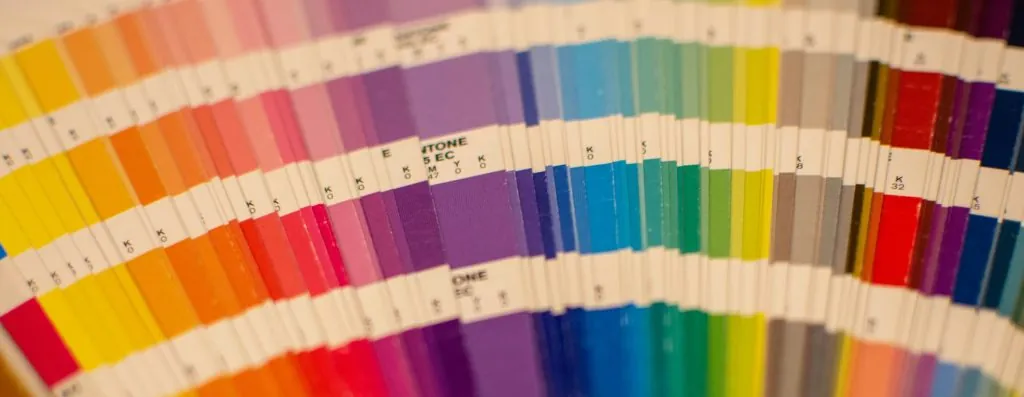
- Pantone Matching
Using the Pantone color system to specify brand colors precisely, so that fabric, print, embroidery thread and packaging can be matched to the same reference. See also Lab Dip.
- Polybag
A clear plastic bag used to protect individual garments in transit and storage. Many brands are now moving to recycled or alternative materials to reduce plastic waste.
- Pre-Production Sample (PPS)
A sample made using the actual bulk fabric, trims and decoration, produced for final approval before bulk production begins. It is the reference that the finished order is checked against.
- Private Label
Products made exclusively for one company and sold under that company's brand. The buyer usually controls the design and specification. Compare with White Label.
- Proto Sample
The first sample made from a techpack, used to check the design, construction and fit. It is often made in substitute fabric and is followed by revised samples until the design is approved.
R
- Recycled Polyester (rPET)
Polyester made from recycled PET plastic, most commonly post-consumer plastic bottles, instead of new petroleum-based material. Recycled content claims are usually verified through a standard such as GRS.
- Retail-Ready Packaging
Products finished, labeled and packed so they can go straight onto the shelf or rail, with hang tags, barcodes, size stickers and branded packaging already in place.
S
- Screen Printing
A printing method where ink is pushed through a fine mesh screen onto the garment, with a separate screen for each color. It produces vivid, durable prints and becomes very cost-effective on larger runs.
- Sea Freight
Shipping goods by container vessel. The most economical way to move large volumes internationally, with longer transit times than air freight. See also FCL and LCL.
- Sedex
A global membership organization and online platform that lets businesses share and manage data on responsible sourcing, covering labor rights, health and safety, the environment and business ethics in their supply chains. See also SMETA.
- Size Set
A set of samples made in several sizes across the range, used to check grading and fit before bulk production starts.
- SMETA
Sedex Members Ethical Trade Audit: a widely used social audit methodology. A 2-pillar audit covers labor standards and health and safety, while a 4-pillar audit adds environment and business ethics. Audit results can be shared with customers through the Sedex platform.
T
- Techpack
A technical specification document that gives a factory everything it needs to make a product: flat sketches, measurements, fabrics, trims, colors, construction details, labeling and packaging instructions. A clear techpack reduces sampling rounds and production errors.
- Traceability
The ability to track a product and its materials back through every stage of the supply chain, from raw fiber and fabric mill to the factory that made it.
- Trims
All the components of a garment other than the main fabric, such as buttons, zips, drawcords, labels, elastic, thread and reflective tape.
U
- Uniform Program
An ongoing arrangement to supply staff uniforms for an organization, typically covering design, sizing, stock holding, replenishment and delivery to multiple locations.
W
- White Label
Generic products made by a manufacturer that different businesses can buy and sell under their own brand, usually with limited changes to the core product. Compare with Private Label.
The Power to Supply Worldwide.
Get your project moving. Contact us for a no-obligation chat.